Remote Diagnostics for ULVAC HELIOT Leak Detectors
Remote diagnostics allows a service engineer to analyse instrument fault data, measurement logs, and configuration without an on-site visit. For many fault types — incorrect calibration factors, sensor reading misinterpretation, mode configuration errors, and some software-related issues — a remote session resolves the problem faster and at lower cost than scheduling an on-site visit. For faults that do require on-site work, remote diagnosis first ensures the on-site visit is properly scoped.
What Can Be Diagnosed Remotely
Performance and Sensitivity Issues
- Low sensitivity / failing internal calibrated leak check
- Calibration factor outside normal range
- Slow pump-down / failure to reach ULTRA flow mode
- High baseline reading
- Unstable or noisy leak rate display
- Long response time or recovery time
Configuration and Operation Issues
- Incorrect test mode selection for application
- Setpoint configuration errors
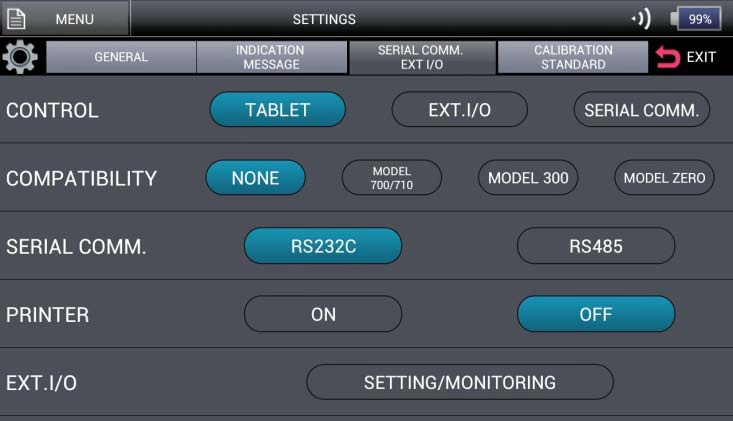
- EXT.I/O or RS-232C interface not working as expected
- Tablet controller connectivity or display issues
- Language or unit setting problems
- User workflow questions (when to use gas ballast, how to perform calibration)
What Cannot Be Diagnosed Remotely
Physical faults require on-site work: ion source filament breakage (replacement required), TMP bearing failure, pump oil contamination, vacuum leak in the instrument body, or any fault requiring component replacement or cleaning. Remote diagnosis can identify that these faults are present and define the required on-site work, saving time when the engineer arrives.
Remote Diagnostics Process
- Initial enquiry: Email mail@ulvacheliot.com with HELIOT model, serial number, and fault description. We respond within 1–2 business days.
- Data collection from operator: We provide a structured checklist of readings and observations to collect from the instrument while it is running or displaying the fault. Readings include: Pirani gauge pressures (fore-line and analyser), pump-down time to ULTRA flow, internal calibrated leak reading, calibration factor, ion source status (filament A/B), error codes if shown, and recent measurement logs if available.
- Analysis: Based on the data provided, we analyse the probable fault category and determine whether remote resolution is likely or on-site work is required.
- Remote resolution or on-site recommendation: For remotely-resolvable faults, we provide step-by-step corrective instructions by email or video call. For faults requiring on-site work, we provide a written scope of work for the required visit.
Data to Send When Requesting Remote Diagnosis
To accelerate diagnosis, include the following in your initial enquiry if the instrument is operational:
- HELIOT model designation (from front panel or nameplate) and serial number
- Error code or error message displayed (exact text or screenshot from tablet)
- Current Pirani gauge readings (fore-line pressure and analyser pressure from status screen)
- Pump-down time from atmospheric to first detection mode (approximate, in minutes)
- Internal calibrated leak reading (the value shown during internal calibration)
- Calibration factor (found in calibration settings menu)
- Ion source status: which filament is active (A or B), emission current if shown
- When fault first appeared and what changed before it appeared (new installation, moved instrument, new gas type, etc.)
- Any recent maintenance or repairs performed on the instrument
If the instrument cannot operate, provide as much of the above as can be obtained before the fault occurs.
Limitations and When On-Site Service Is Needed
Remote diagnostics cannot substitute for physical inspection, component replacement, cleaning, or calibration with external reference hardware. If remote analysis indicates a physical fault, we will define the required on-site service scope and provide an estimate. On-site service can be arranged anywhere in the world.
Request Remote Diagnostics
Email: mail@ulvacheliot.com
We respond within 1–2 business days. Please include as much of the data listed above as you can gather from the instrument.
Repair | Preventive Maintenance | Calibration | On-Site Commissioning